Home / Articles
Everything You Need to Know About Laser-Assisted Cataract Surgery
Home / Articles
Everything You Need to Know About Laser-Assisted Cataract Surgery
Cataracts can be a major hurdle in maintaining clear vision, especially as we age. Fortunately, advancements in medical technology have transformed the landscape of cataract surgery, offering patients a more precise and efficient treatment option. Laser-assisted cataract surgery, in particular, has revolutionized the way ophthalmologists approach this common procedure, providing enhanced accuracy, quicker recovery, and potentially better outcomes for patients. At Gangnam Joeunnun Vision Clinic, we specialize in this advanced form of cataract surgery, offering cutting-edge technology and personalized care under the expertise of Dr. Kim Jun-heon. In this guide, we’ll explore everything you need to know about laser-assisted cataract surgery, from its benefits to the step-by-step process, and help you understand why it might be the right option for you.
To put it simply, laser-assisted cataract surgery uses a laser to perform certain steps of the cataract removal procedure that traditionally required a blade. Cataract surgery aims to remove the cloudy lens from your eye, replacing it with a clear artificial lens (called an intraocular lens or IOL) to restore your vision.
While traditional cataract surgery has been around for decades and is highly successful, the introduction of laser technology has taken it to the next level. Laser-assisted cataract surgery uses femtosecond laser technology — a type of laser that produces ultra-precise pulses of light to break up the cloudy lens and make incisions in the eye, all with a level of precision that's unmatched by manual methods.
At Gangnam Joeunnun Vision Clinic, we understand that each patient’s eye health is unique. While traditional cataract surgery is effective, laser-assisted techniques provide distinct advantages. Let’s dive into why this type of surgery may be right for you:
Traditional cataract surgery requires a surgeon to manually make incisions to remove the cloudy lens. While skilled surgeons can perform this with excellent results, there’s still a degree of variability that can come from the physical nature of the procedure.
Laser-assisted surgery, however, can automate the creation of these incisions with exceptional accuracy, reducing the risk of human error and making the process more predictable. For example, lasers can create the incisions with exact measurements that match your unique eye structure, increasing the likelihood of a successful outcome.
One of the main concerns during any eye surgery is the potential for complications, such as infection or improper healing. Laser-assisted cataract surgery reduces these risks by providing more consistent cuts and more accurate lens fragmentation. This means less trauma to the eye and a smoother recovery process.
Additionally, the precision of the laser reduces the need for larger incisions, further minimizing the chances of post-operative complications.
Many patients undergoing laser-assisted cataract surgery experience a quicker recovery compared to traditional methods. Because the laser creates cleaner incisions with minimal disruption to the eye, healing tends to be faster, allowing patients to resume normal activities sooner.
If you’re wondering what the procedure actually entails, here’s a step-by-step breakdown of how laser-assisted cataract surgery typically unfolds:
Before the surgery, you’ll undergo a comprehensive eye exam to evaluate the overall health of your eyes, the severity of the cataracts, and the best approach for your specific situation. We at Gangnam Joeunnun Vision Clinic pay special attention to your visual goals — whether that’s reducing dependence on glasses or achieving clearer distance vision. This personalized approach helps us recommend the best intraocular lens (IOL) for you.
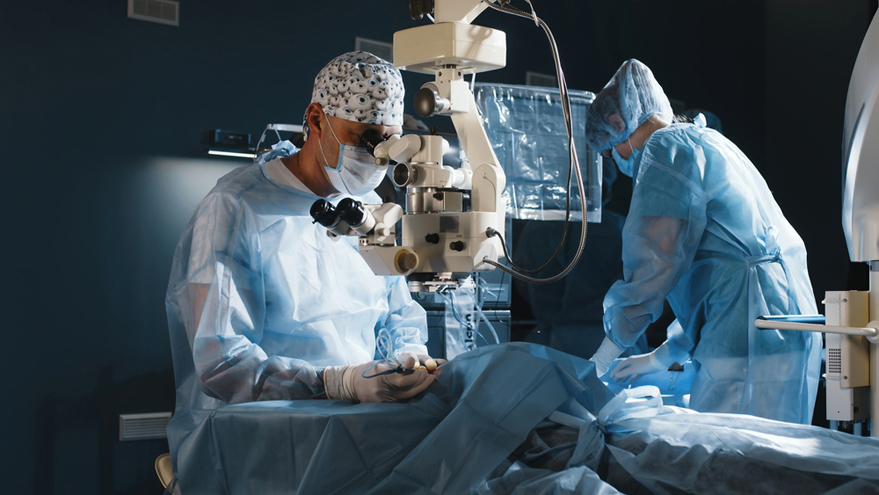
On the day of surgery, you'll be given a local anesthetic to numb the area around your eyes, ensuring that you don’t feel pain during the procedure. The procedure typically takes between 20-30 minutes, and you will be awake but relaxed throughout.
The first step of the surgery involves the femtosecond laser creating very precise incisions in your eye. This laser is also used to soften and break up the cloudy cataract lens, making it easier for the surgeon to remove. The laser even helps to create circular openings in the lens capsule, ensuring it is removed correctly.
Once the cataract is softened by the laser, the surgeon uses micro-instruments to remove the cloudy lens from your eye. This step is minimally invasive and is typically less traumatic to the surrounding tissue due to the accuracy provided by the laser.
After the cataract is removed, the surgeon will insert an artificial lens (IOL) to replace the natural lens. The IOL can be customized based on your visual needs — whether you want to achieve clearer distance vision, reduce your dependence on reading glasses, or correct astigmatism. At Gangnam Joeunnun Vision Clinic, we offer a range of IOL options to meet the diverse needs of our patients.
After the procedure, you’ll be monitored for a short time before being sent home. Most patients experience little discomfort, with some slight dryness or mild irritation being the most common side effects. Your doctor will prescribe eye drops to help prevent infection and promote healing.
You’ll typically have a follow-up appointment within the next day or two to ensure that the eye is healing well and that your vision is improving as expected. Over the next few weeks, your vision will continue to stabilize as your eye heals.
At Gangnam Joeunnun Vision Clinic, we believe in providing personalized, patient-centered care. Our team, led by Dr. Kim Jun-heon, has over 16 years of experience in advanced vision correction procedures, and we specialize in cutting-edge technologies like laser-assisted cataract surgery.
Here’s what sets us apart:
We partner with ZEISS, one of the world leaders in eye care technology, to offer the most advanced lasers and diagnostic equipment available. This ensures the highest precision in every procedure.
We don’t just perform a procedure — we focus on your long-term eye health and vision goals. Whether you're looking to regain clear vision for daily activities or reduce your dependence on glasses, we tailor our recommendations to meet your needs.
Dr. Kim Jun-heon and his team of specialists bring years of expertise to every surgery. We ensure that each patient’s experience is smooth and that they feel fully informed and comfortable with the process.
If you’ve been diagnosed with cataracts and are considering your surgical options, laser-assisted cataract surgery offers numerous advantages, particularly if you're looking for a more precise, less invasive procedure. However, the decision should always be made in consultation with an experienced ophthalmologist who can assess your specific eye health and visual goals.
If you’re wondering whether laser-assisted cataract surgery is right for you, a consultation with the experts at Gangnam Joeunnun Vision Clinic is a great place to start. We’re here to guide you every step of the way, providing a clear understanding of your options and helping you achieve the best possible vision results.
Laser-assisted cataract surgery is a significant advancement in the field of ophthalmology, offering more precise, faster, and less invasive options for cataract removal. With its numerous benefits, including greater accuracy, reduced risk of complications, and faster recovery, this innovative approach to cataract surgery can help you achieve clearer vision and a better quality of life. At Gangnam Joeunnun Vision Clinic, we are proud to offer this advanced technology, ensuring that each patient receives the best possible care tailored to their unique needs. If you're considering cataract surgery, a consultation with our experienced team is the first step toward regaining your vision and improving your daily life. Reach out to us today to learn more and take the next step toward clearer, more vibrant vision.