Home / Articles
How IOL (Intraocular Lens) Implants Make Cataract Surgery More Effective
Home / Articles
How IOL (Intraocular Lens) Implants Make Cataract Surgery More Effective
In a fast-paced world like Seoul — where digital screens, night driving, and long work hours are part of everyday life — our eyes are constantly working overtime. So when vision begins to blur, especially due to cataracts, the change can feel more disorienting than expected. At first, it's subtle: headlights start to glare more, reading becomes tiring, colors lose their sharpness. But over time, the fog thickens.
Cataracts are a natural part of aging, but their impact on daily life is anything but minor. The good news? Cataract surgery has become one of the safest and most successful procedures in modern medicine. And thanks to IOLs — intraocular lens implants — this surgery can now do far more than simply restore vision. It can enhance it.
At Gangnam Joeunnun Vision Clinic, we see cataract surgery not as the end of a problem, but as the beginning of clearer, sharper, and often glasses-free vision. This article explores how IOL technology is transforming the experience and outcomes of cataract surgery — and what that could mean for you or a loved one.
To understand the power of IOLs, imagine your eye as a high-end camera. The lens is the critical piece that focuses light and creates a sharp image. As we age, that lens becomes cloudy — what we call a cataract.
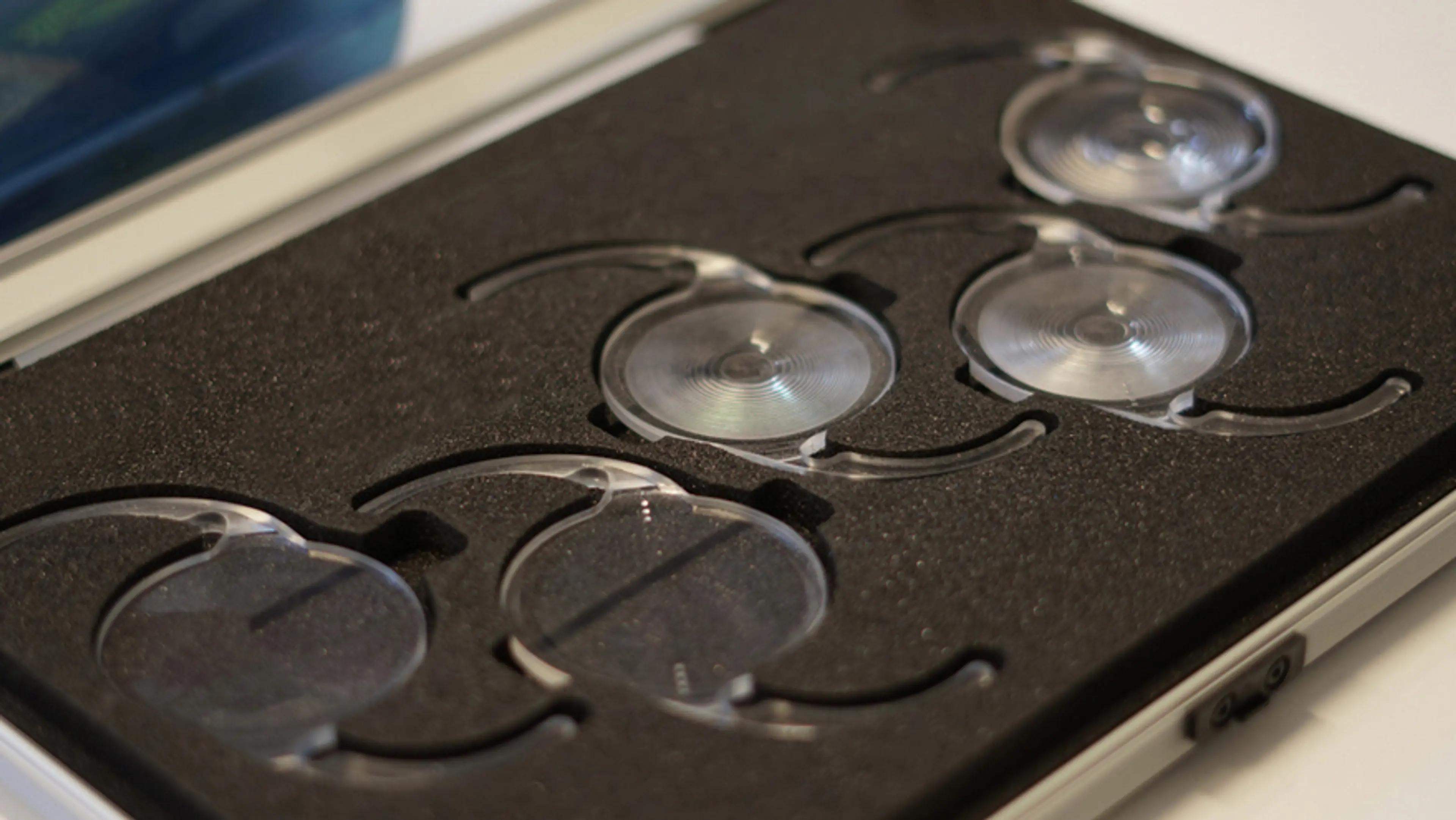
During cataract surgery, we remove that cloudy natural lens and replace it with an intraocular lens — a tiny, artificial implant engineered to restore clarity.
But here’s what most people don’t realize: Modern IOLs are not simply replacements. They are enhancements. They can correct existing refractive errors (like nearsightedness, farsightedness, and astigmatism), reduce dependence on glasses, and even filter out harmful UV or blue light.
At Gangnam Joeunnun Vision Clinic, we think of IOLs as custom lenses for life — designed to match your unique visual goals, whether that means crisp reading vision, sharp night driving, or seamless focus across all distances.
In the early days of cataract surgery, patients often had their lenses removed without any replacement. They relied on thick glasses, known as “Coke bottle lenses,” which provided limited correction and poor quality of life.
Then came the invention of IOLs — a game-changer in the field of ophthalmology.
Today, IOLs are precision-calibrated optical devices. With the help of advanced biometry tools like the ZEISS IOLMaster (used at our clinic), we can select or customize a lens that fits the eye’s anatomy down to the micron. This level of precision is one reason our surgical outcomes are so consistently successful.
One of the most powerful aspects of modern IOLs is customizability. No two eyes are the same — and your IOL should reflect your unique lifestyle and vision needs.
Best for: Patients who prioritize distance vision and don’t mind using glasses for near tasks.
Consideration: Affordable, reliable, and time-tested — but not designed for multifocal focus.
Think of these as progressive lenses inside your eye. They have distinct zones for near, intermediate, and far vision.
Best for: Patients who want freedom from glasses for most daily tasks, including reading, using smartphones, and driving.
“Multifocal IOLs can dramatically improve quality of life, but they’re not for everyone. We conduct multiple diagnostic tests — including pupil analysis and contrast sensitivity — to determine suitability.”
Toric lenses correct astigmatism, an irregular curvature of the cornea that causes blurred or distorted vision.
Best for: Patients with moderate to severe astigmatism who want a permanent correction during cataract surgery.
These are the next evolution in lens technology, offering a continuous range of focus rather than segmented zones.
Best for: Patients who want smoother transitions between near and far vision, with fewer side effects like halos.
Added Benefit: Often more forgiving to neurological adaptation than multifocal lenses.
IOL implants don’t just make cataract surgery more effective — they redefine its purpose. Here’s how:
Once implanted, IOLs do not wear out. Unlike glasses or contact lenses that can break or shift, a high-quality IOL provides stable, lifelong clarity.
Your IOL can be chosen based on your hobbies, work habits, and lifestyle needs. Whether you’re an avid golfer, a reader, or someone who drives long distances at night — there’s a lens for that.
This is the game-changer. Many of our patients walk away from cataract surgery not only seeing clearly but also enjoying freedom from bifocals, readers, or progressive lenses.
With advanced lens materials and precision placement, today’s IOLs integrate seamlessly with the eye. At our clinic, using minimally invasive techniques and computer-assisted surgery, we achieve faster recovery and fewer complications.
To be honest, many patients — and even some general eye clinics — underestimate how critical IOL selection is to the success of cataract surgery.
If a clinic uses the same standard IOL for every patient, the result might be “good enough” — but not excellent. At Gangnam Joeunnun Vision Clinic, we believe your eyesight deserves excellence.
That’s why we conduct a comprehensive pre-op analysis, including:
Ocular biometry (exact eye measurements)
Corneal mapping
Tear film analysis
Lifestyle-based visual needs assessment
At our clinic in Gangnam, the journey typically looks like this:
We’ve had patients in their 50s say,
“I didn’t know cataract surgery could actually give me better vision than I had in my youth.”
Some return to hobbies they had abandoned — from painting to night driving. Others simply appreciate the everyday joy of seeing their grandchildren’s faces clearly without reaching for glasses.
And because premium IOLs are built to last a lifetime, the benefits extend far beyond the surgical suite.
The decision to undergo cataract surgery is a big one — not just medically, but personally. It’s not just about seeing better; it’s about living better. And in today’s world, IOL technology makes that possible in ways we couldn’t imagine just a generation ago.
Whether you’re hoping to drive with confidence, read without reaching for your glasses, or simply enjoy the world around you in full clarity again, the type of lens you choose matters. It’s the quiet hero of the surgery — and the key to long-term satisfaction.
At Gangnam Joeunnun Vision Clinic, our mission is simple: provide world-class, customized vision care that fits your lifestyle and goals. With over 16 years of experience and a commitment to using the most advanced tools from ZEISS and beyond, we help patients see not only with clarity — but with confidence.