Home / Articles
What Can You Expect During Your Phacoemulsification Surgery?
Home / Articles
What Can You Expect During Your Phacoemulsification Surgery?
We live in a visual culture. Whether it's checking text messages, reading the subway signs in Seoul, driving through the city, or simply enjoying a meal with loved ones, our eyes are constantly at work. In Korea — where attention to detail, aesthetics, and productivity is part of daily life — healthy vision isn’t a luxury. It’s essential.
That’s why cataracts, though common, can be so disruptive. At first, they might feel like just another sign of aging — a little more blur, some glare at night, slightly faded colors. But for many, the decline sneaks up until everyday tasks become difficult. And that’s where phacoemulsification cataract surgery comes in.
At Gangnam Joeunnun Vision Clinic, we specialize in this advanced, minimally invasive surgical procedure — helping thousands of patients each year regain the sharp, vibrant vision they thought they had lost forever.
If you’re preparing for phacoemulsification surgery, or simply exploring your options, this guide will walk you through every stage of the experience — from first consultation to full recovery — with honesty, clarity, and the personal insight that only a trusted ophthalmology clinic can offer.
To truly appreciate what phacoemulsification offers, it helps to understand what’s happening inside your eye.
Your natural lens — located behind the iris and pupil — is normally clear. Its job is to focus light onto the retina, much like the lens of a camera. But as we age, especially past our 50s, that lens can become cloudy. This clouding is called a cataract, and it’s incredibly common.
In fact, by age 70, over 80% of Koreans will have at least some degree of cataract development — a natural part of aging, often accelerated by UV exposure, diabetes, or even long-term use of certain medications.
Symptoms of cataracts often include:
Blurry or hazy vision
Difficulty seeing at night or in dim light
Increased sensitivity to glare (especially while driving)
Muted color perception
Frequent changes in eyeglass prescriptions
Unlike other eye conditions, cataracts can’t be corrected with glasses or contact lenses. They require surgical removal and replacement with an artificial lens — and phacoemulsification is the most effective and trusted way to do that.
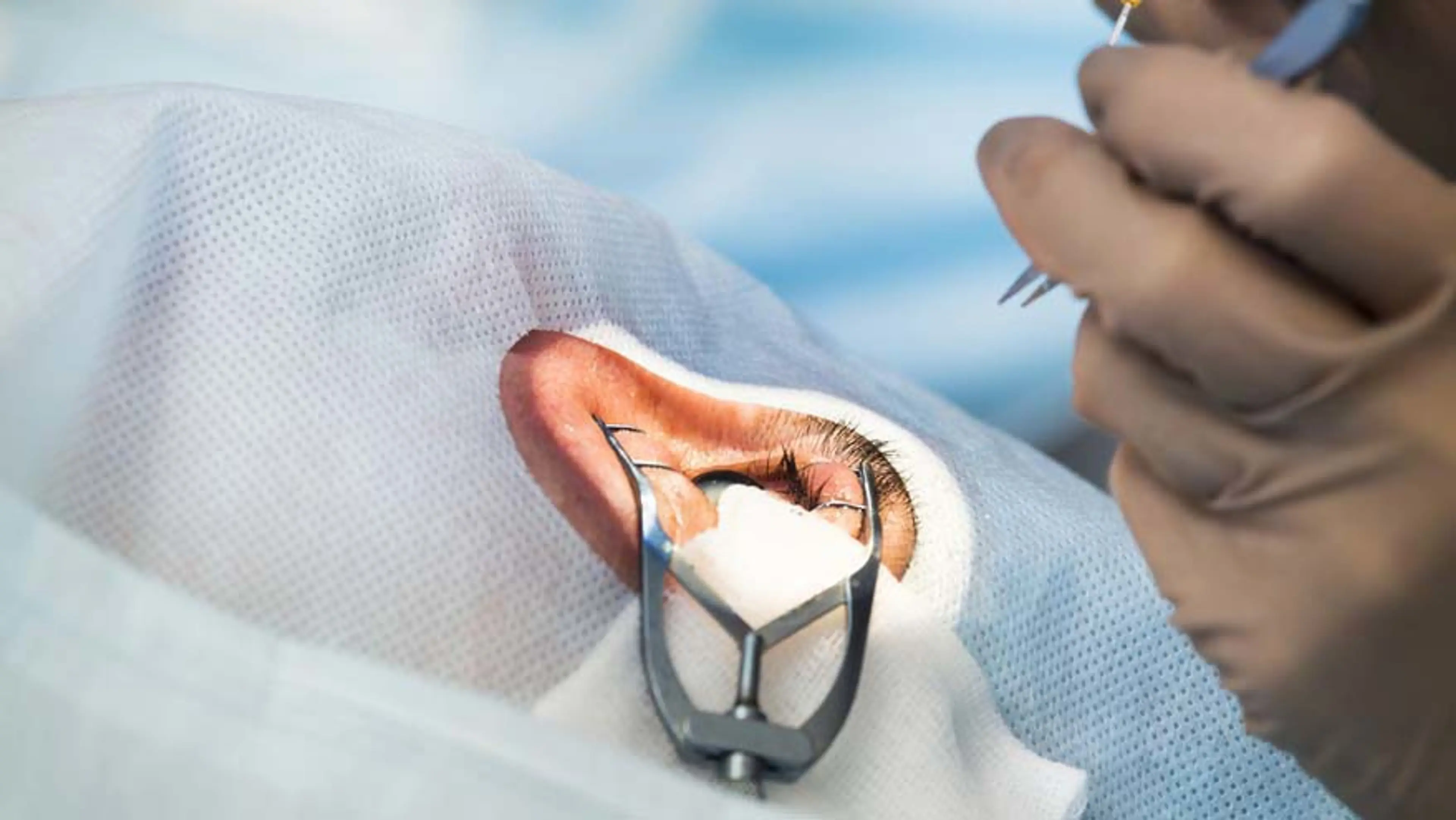
Phacoemulsification (commonly shortened to “phaco”) is the most advanced and widely used method of cataract removal in the world today. At Gangnam Joeunnun Vision Clinic, we use next-generation ZEISS technology to perform this procedure with unparalleled precision.
Here’s how it works:
A tiny probe is inserted through a micro-incision in the cornea.
These fragments are then suctioned out.
The incision is so small (about 2-3 mm) that no stitches are usually required. The entire procedure typically takes just 10–15 minutes per eye. Most patients remain awake throughout, experiencing no pain, only some mild light sensations or gentle pressure.
Let’s break it down into real, tangible steps — so you can walk into your surgery day with total confidence.
Your phacoemulsification journey starts with an in-depth examination at Gangnam Joeunnun Vision Clinic.
We don’t believe in cookie-cutter care. Dr. Kim Jun-heon and our team begin by conducting a comprehensive eye assessment, including:
Visual acuity testing
Intraocular pressure measurement
Corneal curvature and topography
Ocular biometry (precise eye length and shape measurement)
Retina and optic nerve evaluation
We also sit down with you to learn about your lifestyle. For example:
Do you use digital devices all day?
Are you an avid reader or a night driver?
Would you like to reduce your dependence on glasses?
These answers guide our recommendation for the type of IOL best suited to your needs — whether it’s monofocal, multifocal, extended depth-of-focus (EDOF), or toric for astigmatism.
We take time to explain the options — in your language, not medical jargon. It’s not just about seeing better. It’s about seeing in a way that matches your life.
On surgery day, you’ll arrive at our clinic in the heart of Gangnam. It’s a familiar, welcoming space — not a cold hospital ward. Our staff will greet you and walk you through the process.
We clean the eye area thoroughly.
You may receive a mild sedative if needed — most patients feel calm and comfortable.
You’ll lie on a bed in a surgical suite with advanced microscopes.
Using a microscopic incision, the surgeon gently inserts the ultrasonic probe.
The cataract is broken into microscopic pieces and removed.
A new, folded IOL is inserted and unfolds naturally into place.
The incision self-seals — no stitches required.
You’ll rest in a recovery area for about 30 minutes.
Your eye will be checked again.
A protective shield will be placed over your eye before you go home.
At Gangnam Joeunnun Vision Clinic, we provide all post-op medications and guidance. Key recommendations include:
Use prescribed eye drops (antibiotic + anti-inflammatory)
Avoid rubbing or pressing on your eye
Wear sunglasses outdoors
Skip saunas, swimming, and eye makeup for 2–3 weeks
Use an eye shield during sleep for the first week
If any discomfort arises, our team is available to support you — even outside of clinic hours.
With so many options in Seoul, why do patients — both local and international — place their trust in us?
Because we don’t just do cataract surgery. We specialize in it.
Here’s what sets us apart:
There’s a beautiful moment after cataract surgery when a patient looks out the window and gasps — not because something new appeared, but because they can see it again. The details of leaves, the softness of sunlight, the vibrancy of colors — all restored.
Phacoemulsification is more than a procedure. It’s a return to visual freedom.
At Gangnam Joeunnun Vision Clinic, we understand the decision to undergo surgery is deeply personal. That’s why we prioritize education, transparency, and customized care — before, during, and after your surgery.