Home / Articles
What Happens During a Laser-Assisted Cataract Surgery Procedure?
Home / Articles
What Happens During a Laser-Assisted Cataract Surgery Procedure?
If you’ve been struggling with cloudy vision, sensitivity to light, or difficulty reading even under bright lighting, you’re not alone — these are classic signs of cataracts, one of the most common age-related eye conditions in Korea and around the world. For many, cataracts slowly creep into daily life, making it harder to drive safely at night, recognize faces clearly, or enjoy the details of a good book or your favorite hobby.
But here's the good news: cataract surgery today is more advanced, accurate, and patient-friendly than ever before.
Thanks to laser-assisted cataract surgery, we’ve entered a new chapter in eye care — one where the combination of digital imaging, femtosecond laser technology, and premium intraocular lenses (IOLs) allows us to restore vision with unprecedented precision.
At Gangnam Joeunnun Vision Clinic, located in Seoul’s Gangnam district, we specialize in this cutting-edge procedure. Under the leadership of Dr. Kim Jun-heon, we’ve helped thousands of patients reclaim their clarity and confidence through a more customized and comfortable cataract surgery experience.
In this article, we’ll walk you through exactly what happens during laser-assisted cataract surgery — from your first consultation to your final check-up. Whether you're considering the procedure for yourself or helping a parent navigate their options, this guide will give you a clear understanding of what to expect — and why the choice of clinic and technology truly matters.
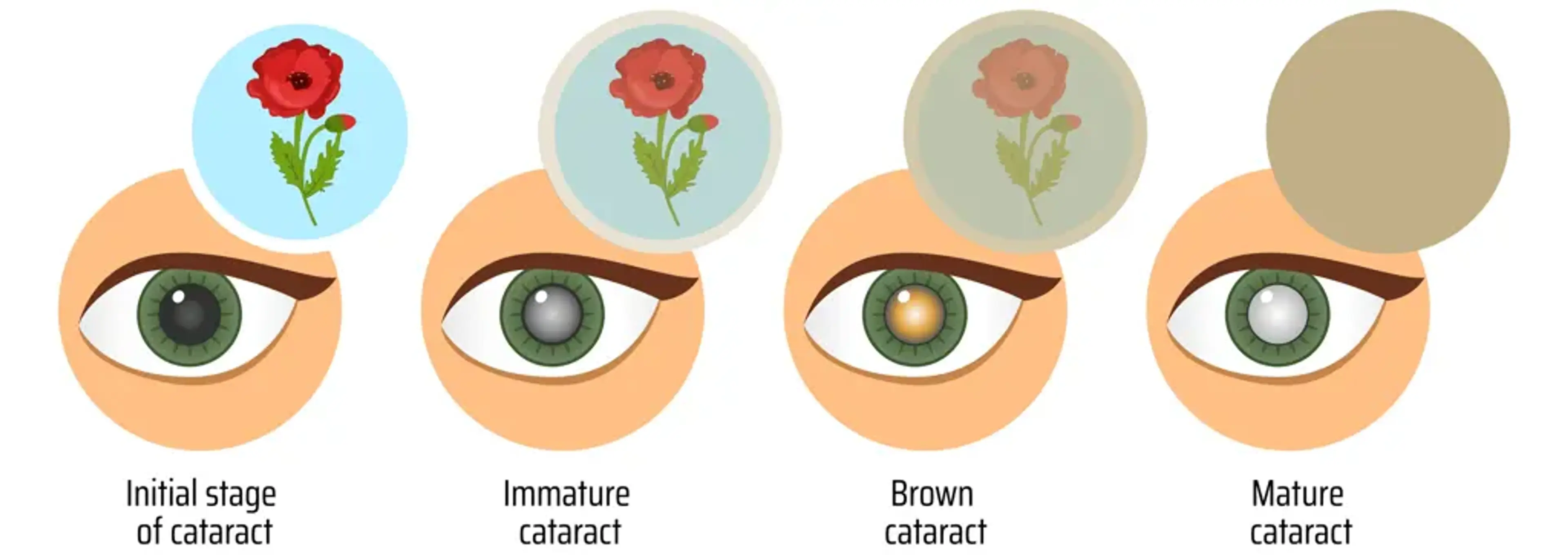
Your eye's natural lens is crystal clear in youth, but with age, it can slowly become cloudy — like a foggy window or a steamed-up camera lens. That’s a cataract. In Korea, where visual demands are high and life expectancy is rising, cataracts are becoming increasingly common — often beginning in the late 50s or early 60s.
Let’s clear up a common misconception.
Not all cataract surgeries are the same.
While traditional surgery relies on manual tools like blades and handheld instruments, laser-assisted cataract surgery uses a femtosecond laser — the same class of laser trusted in advanced LASIK and SMILE procedures.
At Gangnam Joeunnun Vision Clinic, we use ZEISS’ state-of-the-art laser platform, which allows us to perform highly precise steps such as:
Softening the cataract with laser pulses, making removal gentler
Let’s break down the full journey — from pre-surgery prep to recovery.
The process starts long before you enter the operating room.
At Gangnam Joeunnun Vision Clinic, we perform comprehensive diagnostics using high-resolution 3D imaging. This allows us to:
We use OCT (Optical Coherence Tomography) to guide our surgical plan. Every step of your procedure is customized. Nothing is “one-size-fits-all.”
Patients often tell us that this is where they begin to feel trust — because they can see how tailored their treatment will be.
On the day of surgery, you’ll be awake but comfortable. We use:
Mild sedatives (if needed) to help you relax
Eye-positioning and tracking systems to ensure the laser stays aligned even if you blink or move
You won’t feel pain. At most, you’ll see some lights and feel a slight pressure.
It’s normal to feel a little nervous — but most patients say the experience is quicker and easier than they expected.
This is the key moment where laser-assisted surgery differs from the traditional method.
The femtosecond laser performs three key tasks:
Instead of using a blade, the laser creates micro-incisions with extreme precision. These tiny cuts are self-sealing and reduce the risk of infection or healing issues.
This is the circular “window” that gives access to your cloudy lens. A perfectly round, centered capsulotomy is essential for proper IOL positioning — and the laser ensures unmatched accuracy here.
The laser then breaks up the cloudy lens into small, soft pieces — which means less ultrasound energy is needed later, minimizing damage to surrounding tissues.
This entire laser process takes only a few minutes — and it sets the foundation for a smooth, successful outcome.
After the laser has done its part, the surgeon uses a technique called phacoemulsification — a gentle suction device — to remove the cataract fragments.
Then, the selected intraocular lens (IOL) is folded and inserted through the tiny incision. Once inside, it unfolds and settles into place — where it will remain for the rest of your life.
You can think of this lens as your new visual engine. And we offer:
Your lifestyle, profession, and even hobbies influence this decision — and we spend time discussing these details with every patient.
Once the IOL is in place, the surgeon checks alignment, verifies that everything looks perfect, and the tiny incision typically seals without stitches.
You’ll rest briefly, receive protective eyewear, and be given your personalized post-op instructions and eyedrop schedule.
You’ll go home the same day — and most patients return to near-normal routines within 1 to 3 days.
Laser-assisted cataract surgery often leads to quicker recovery, less inflammation, and sharper visual outcomes.
Most patients notice improved clarity within 24–48 hours, and full visual stabilization happens over a few weeks.
We recommend:
Avoiding strenuous activity for a few days
Wearing an eye shield while sleeping
Taking prescribed eye drops as directed
Avoiding eye rubbing or getting water in the eye
At Gangnam Joeunnun Vision Clinic, we follow up with each patient multiple times — monitoring progress, managing dry eye if necessary, and adjusting visual correction as needed.
Here’s a truth we often share with our patients:
“Cataract surgery isn’t just a fix — it’s a once-in-a-lifetime chance to upgrade your vision.”
In many cases, patients walk away with better vision than they had before cataracts developed — especially if they choose advanced lenses.
We’ve helped CEOs, musicians, teachers, and grandparents regain the confidence to drive, read, and enjoy life with clarity — and in many cases, without glasses.
But the outcome depends heavily on two things:
That’s why choosing the right clinic matters — and why we at Gangnam Joeunnun Vision Clinic have invested in the best of both.
Choosing cataract surgery isn’t just about treating a medical condition — it’s about reclaiming clarity, independence, and peace of mind.
Laser-assisted cataract surgery offers a new level of precision, safety, and visual outcomes — especially when paired with advanced intraocular lenses tailored to your lifestyle. At Gangnam Joeunnun Vision Clinic, we don’t just perform surgery — we craft personalized solutions designed to help you see beautifully for decades to come.
If you’re starting to notice signs of cataracts — or have already been diagnosed and are exploring your options — now is the time to consider what’s possible with today’s technology.