Home / Articles
When Should You Consider IOL Implants for Your Cataract Surgery?
Home / Articles
When Should You Consider IOL Implants for Your Cataract Surgery?
If you’ve ever tried taking a photo through a fogged-up camera lens, you’ll know how frustrating it is. No matter how well you adjust the settings, the image never comes out clear. For many people living with cataracts, this is what everyday life starts to feel like: blurred outlines, dull colors, difficulty recognizing faces, and increasingly challenging night vision.
In South Korea, where visual clarity is tied closely to daily convenience and professional life, cataracts can be especially limiting. Whether it’s reading your smartphone screen, driving home along Seoul’s expressways at night, or giving presentations in a well-lit office, clear vision is essential. That’s why cataract surgery is not only one of the most common surgeries performed worldwide, but also one of the most transformative.
At Gangnam Joeunnun Vision Clinic, under the guidance of Dr. Kim Jun-heon, we’ve seen firsthand how the right IOL can restore not just clarity, but freedom — freedom from glasses, freedom from visual strain, and freedom to live life without compromise. So the key question becomes: when should you consider IOL implants for your cataract surgery, and which type is right for you?
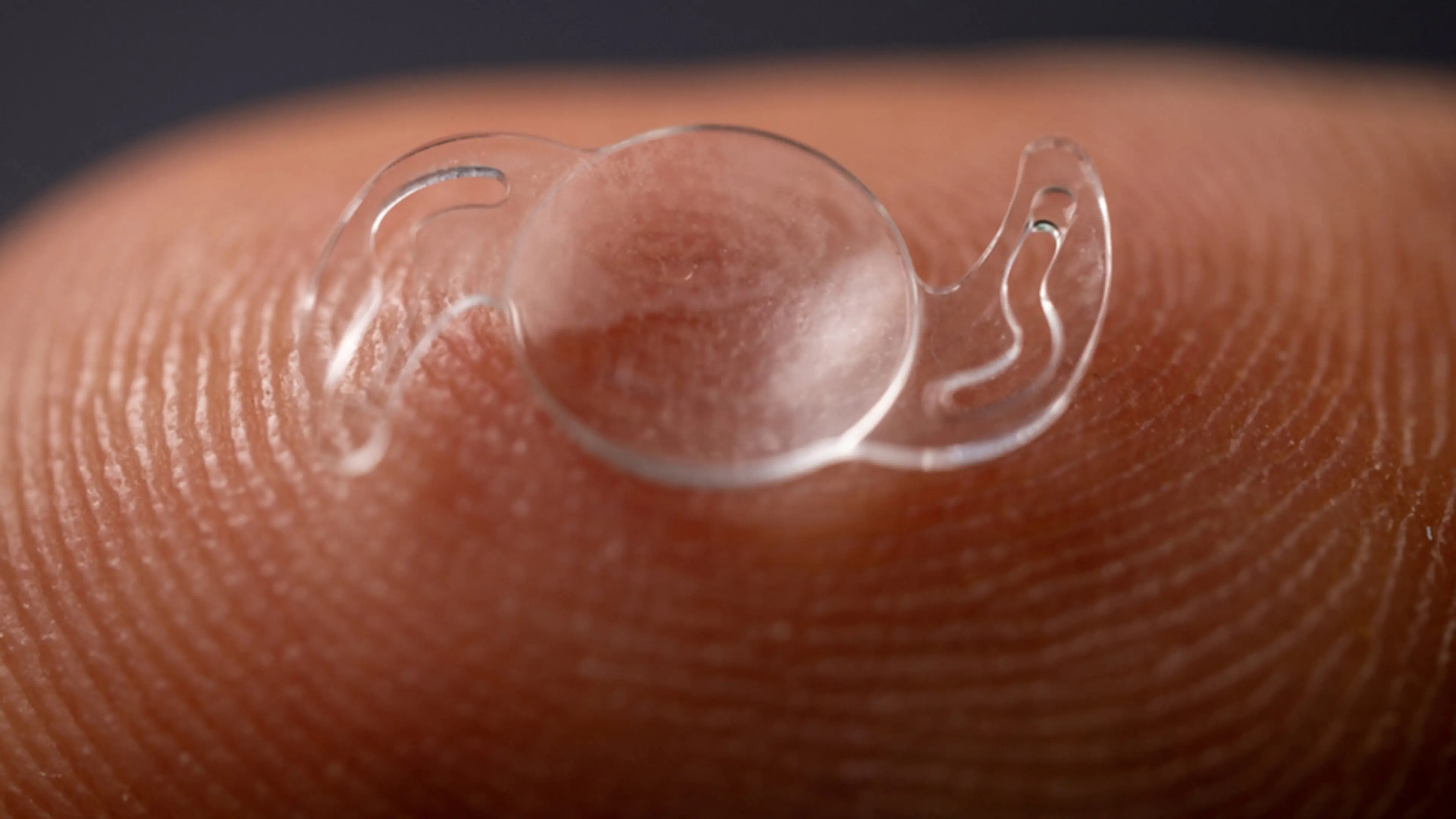
During cataract surgery, the clouded natural lens of the eye is removed and replaced with an artificial lens, called an intraocular lens (IOL). This is the permanent “new lens” that stays in your eye for the rest of your life.
Think of your eye as a camera. The cornea is like the camera’s front glass, while the lens is the focusing mechanism. If the focusing lens becomes cloudy or scratched, the entire photo turns blurry. Replacing the natural lens with a high-quality IOL is like installing a brand-new optical system — suddenly, images are sharp, colors are vibrant, and details return with stunning clarity.
Modern IOLs do more than just replace the clouded natural lens. They can also correct existing vision problems such as myopia (nearsightedness), hyperopia (farsightedness), presbyopia (age-related near vision loss), and astigmatism. In other words, the right IOL can reduce or even eliminate your dependence on glasses and contact lenses after surgery.
For many patients, the instinct is to “just fix the cataract.” But what’s often overlooked is that the choice of IOL determines how well you’ll see for the rest of your life. Since most people only have cataract surgery once, this decision is more important than many realize.
Here are key scenarios when considering advanced IOL implants makes sense:
If you’ve worn glasses for decades, cataract surgery can be a chance to regain independence. Multifocal and extended-depth-of-focus (EDOF) IOLs can provide clear vision at multiple distances, reducing or eliminating the need for glasses. Patients often describe it as “seeing the world with brand-new eyes.”
Standard IOLs do not correct astigmatism, which means you would still need glasses. Toric IOLs, however, are specially designed to address this issue, giving patients sharper and more stable vision.
In Korea, lifestyle plays a huge role in IOL selection. For example, a retiree who spends mornings reading at home may prioritize near vision, while a younger professional who spends hours on a computer and commutes late at night may need lenses optimized for intermediate and distance clarity.
Halos, glare, or starbursts around lights are common issues with certain IOLs. If you drive often at night — a common reality in Korea’s late-night work culture — choosing an IOL with reduced glare properties becomes essential.
Selecting among these isn’t just a medical decision; it’s a lifestyle decision. That’s why our consultations go beyond eye measurements — we ask about your habits, routines, and long-term goals.
Not every patient can benefit from every type of IOL. Factors such as corneal health, retinal condition, and even eye shape affect eligibility.
For example:
Patients with healthy retinas may do well with multifocal or EDOF lenses.
Patients with pre-existing eye conditions (like macular degeneration) may be better suited for monofocal lenses for stability.
Active patients with astigmatism often benefit most from toric lenses.
Koreans tend to place a strong emphasis on long-term eye health and convenience. With people living longer and more active lives, choosing an IOL isn’t just about today — it’s about the next 30 to 40 years.
Consider this: a patient in their 60s who undergoes cataract surgery may live well into their 90s. That’s three decades of relying on the implanted lens. Unlike glasses or contact lenses, which can be easily replaced, an IOL is designed to last a lifetime. For this reason, many Korean patients view premium IOLs as a practical investment in their future independence.
Under the leadership of Dr. Kim Jun-heon, our clinic has spent over 16 years refining cataract and refractive surgery techniques. We work closely with ZEISS, a global leader in ophthalmic technology, ensuring that our patients have access to the most advanced lens options and precise diagnostic equipment.
But beyond technology, what patients often highlight is the personalized care. Cataract surgery may be common, but your eyes — your lifestyle, your needs, your future — are unique. That’s why we don’t just recommend a lens; we walk you through the implications of each choice, ensuring you feel confident and empowered in your decision.
Cataract surgery is about much more than removing a cloudy lens. It’s an opportunity to reclaim your vision, reduce dependence on glasses, and shape how you’ll see the world for decades to come.
If cataracts are starting to interfere with your life — whether that’s struggling to read your smartphone, finding night driving stressful, or simply feeling that the world looks duller than it should — it may be the right time to consider IOL implants.
At Gangnam Joeunnun Vision Clinic, we believe that vision correction is about more than medical precision; it’s about restoring your independence, your confidence, and your ability to enjoy life without compromise.